

A matching requirement can strengthen a grant-funded project by showing that the applicant and its partners are invested in the work. It can also create a serious compliance problem when contributions are estimated loosely, promised twice, or supported by records that cannot survive review.
The safest approach is to treat matching funds and in-kind contributions as part of the financial system from the beginning. Every contribution should be allowable, necessary, fairly valued, committed to the correct project period, and supported by evidence. The budget, letters, accounting records, time sheets, inventory, and final reports should tell the same story.
This guide explains how to interpret a match requirement, distinguish cash from in-kind support, calculate the required amount, collect commitments, document actual contributions, and avoid the errors that commonly lead to disallowed costs.
What a grant match means
A match is the portion of an eligible project cost that will be supported by resources other than the requested grant. The notice may call it matching share, cost share, non-federal share, recipient contribution, or leveraged resources. Those terms can have different technical meanings, so follow the definitions and formulas in the specific opportunity.
Some programs require a match as a condition of eligibility. Others award points for voluntary contributions. A funder may require cash, permit in-kind support, restrict the sources that count, or require approval before one type can replace another. Never assume that a contribution accepted under one grant will qualify under another.
Cash match, in-kind contributions, and leveraged resources
Cash match is money the recipient or an eligible third party contributes toward allowable project costs. Examples include unrestricted organizational funds used for project salaries, a local government allocation for eligible equipment, or a partner payment applied to approved program expenses.
In-kind contribution is the value of an eligible noncash good or service provided for the project. Examples include documented volunteer labor, donated professional services, contributed supplies, approved use of space, or equipment used during the project.
Leveraged resources are resources that support the broader effort but may not satisfy the formal match. A partner may refer participants, provide separate services, or operate a related program. Those activities may be valuable without meeting the funder’s rules for match. Describe leverage accurately and keep it separate from the amount used to meet the requirement.
Read the notice before calculating anything
Extract the complete match rule from the notice, regulations, application instructions, budget forms, and amendments. Record:
- whether match is required, optional, or rewarded;
- the percentage or ratio and the calculation base;
- whether the requirement applies annually or across the full project;
- which cash and in-kind sources are eligible;
- whether contributions must come from non-federal sources;
- whether unrecovered indirect costs may count;
- when commitments must be documented;
- whether excess match becomes subject to grant requirements; and
- what happens if the recipient does not meet the promised amount.
If the instructions are ambiguous, document the question and obtain an authoritative answer through the funder’s stated process. Save the clarification with the application records.
Calculate the required match correctly
Match percentages are not always calculated from the same base. Two common methods produce different answers.
Percentage of the grant request
If the requirement is 20 percent of the grant amount and the request is $100,000, the match is $20,000. The total project cost is $120,000.
Percentage of total project cost
If the recipient share must equal 20 percent of total project cost, a $100,000 grant is 80 percent of the total. Divide $100,000 by 0.80 to obtain a $125,000 total project. The required match is $25,000.
The phrase “20 percent match” is therefore incomplete. Write the formula in the budget notes and have finance review it. For multi-year awards, calculate both annual and cumulative requirements so a shortfall does not remain hidden until the final period.
Create a match plan tied to the project budget
Do not begin with a list of whatever donations may be available. Begin with the approved activities and identify eligible costs that could be supported by a reliable source. A match plan should show the budget category, contribution, provider, valuation method, timing, documentation, owner, and contingency.
A strong plan answers several questions:
- Does the project genuinely need this resource?
- Would the cost be allowable if the grant paid for it directly?
- Will the contribution occur during the eligible project period?
- Can the organization verify the value and use?
- Is the provider authorized to make the commitment?
- Has the same contribution been promised to another award?
- What will replace it if the contribution does not materialize?
A smaller number of dependable, well-documented sources is usually safer than an ambitious collection of uncertain donations.
Build a contribution register
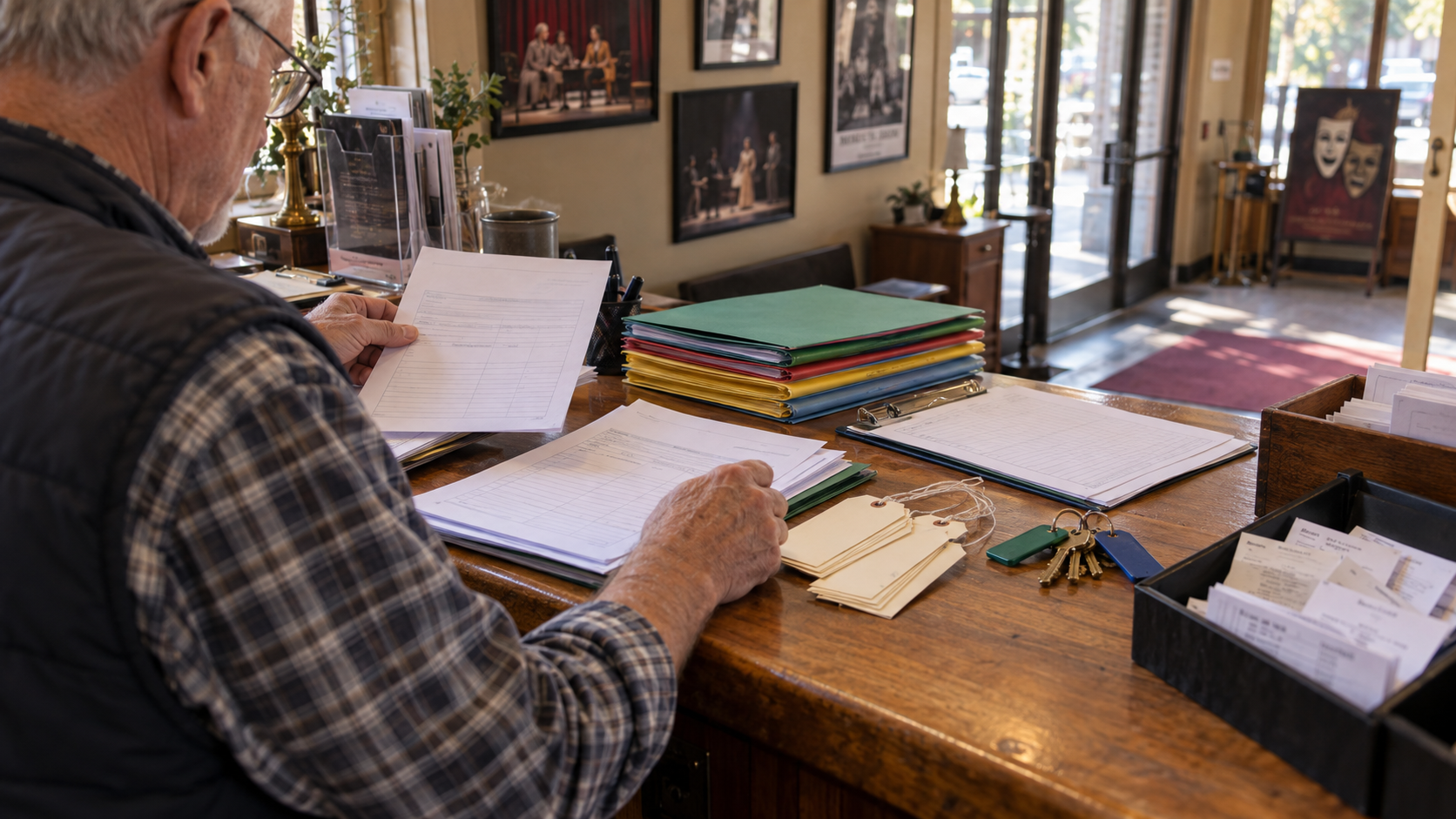
Create one controlled register for every proposed and actual contribution. Assign each item a unique reference and capture:
- provider name and contact;
- cash or in-kind classification;
- description and intended project use;
- budget category and project period;
- committed amount or quantity;
- valuation method and supporting source;
- date received or service period;
- actual accepted value;
- location of the source documents;
- review and approval status; and
- confirmation that the item is not counted elsewhere.
Reconcile the register with the general ledger and grant report at least monthly. The register gives program and finance staff one shared view of whether the match is adequate and properly supported.
Document cash contributions
Cash match requires more than a promise or bank balance. Records should show the source, approval, receipt, and use of the money for an allowable project cost. Depending on the transaction, evidence may include an award letter, board-approved allocation, partner agreement, deposit record, general-ledger entry, invoice, payroll record, canceled check, or payment confirmation.
Trace the full path: the contributor made the payment, the recipient recorded it, and the funds paid for an eligible cost assigned to the grant. If a partner pays an eligible vendor directly, retain the partner’s invoice and proof of payment along with evidence that the expense supported the approved project.
Document donated professional services
Professional services may include legal review, clinical work, accounting, design, interpretation, engineering, training, or evaluation. The value should reflect the service actually performed in the relevant market, not the volunteer’s highest possible earning rate.
Maintain:
- a written description of the service and its project purpose;
- dates, hours, and specific work performed;
- the provider’s signed verification;
- the rate and objective basis for that rate;
- evidence that the work was completed; and
- review by the responsible program and finance staff.
If a lawyer volunteers to pack program kits, value the contribution as the work performed, not as legal services. If the lawyer provides necessary legal review, a reasonable professional rate may apply if the funder’s rules permit it and the rate is supported.
Document general volunteer time
Volunteer time should be necessary for the project and recorded with the same discipline used for paid labor. Use contemporaneous time records that identify the volunteer, date, hours, activity, project, and approval. Avoid estimates created months later.
Choose a reasonable rate for the work performed. Possible support includes the organization’s established rate for similar work, local wage data for the role, or another method permitted by the funder. Document the source and date of the rate. Apply it consistently. If the role changes, document why a different rate is appropriate.
Document donated supplies and equipment
For donated consumable supplies, record the item, quantity, condition, date received, project use, and fair value. Keep donor documentation and evidence of the market price, such as comparable vendor prices. Do not use an inflated retail price when the same item is routinely available for less.
Equipment requires additional care. Determine whether the contribution is ownership of the asset or temporary use. A donated piece of equipment and the loan of that equipment are not valued the same way. For temporary use, a reasonable rental or use value may be appropriate if permitted. Keep model, condition, service dates, hours or days used, valuation evidence, custody records, and any required approval.
Document donated space
Donated space may include classrooms, meeting rooms, clinics, storage, or offices used for grant activities. Record the address, type of space, usable area, dates and hours, project purpose, and valuation basis. A comparable local rental rate may be relevant, but the value should reflect comparable space and the actual period of use.
A partner should not claim the full monthly rental value of a room used by the project for two hours. Use a documented allocation method. If utilities or services are included, avoid counting them separately unless the valuation clearly excludes them.
Document transportation and other shared resources
Transportation may be contributed through vehicle use, mileage, transit passes, fuel, or delivery services. Use the method permitted by the award and avoid mixing incompatible methods. If vehicle use is valued with a mileage rate that includes operating costs, do not also count fuel and maintenance for the same travel.
For shared resources, document an allocation basis tied to actual project use. Square footage, hours, miles, participants, or another reasonable measure may be appropriate. Write down the method before reporting begins and apply it consistently.

Write commitment letters that can be verified
A commitment letter should be specific enough to support the application and later administration. It should identify the contributor, project, contribution, estimated value, valuation basis, timing, conditions, and authorized signer. In-kind letters should describe the quantity or service instead of providing only a dollar amount.
For example, a partner might commit use of a training room for twelve workshops, including the dates or expected schedule and the agreed method for valuing each use. Another partner might commit 80 hours of licensed interpretation at a supported hourly rate. Specific commitments are easier to budget, monitor, and replace if circumstances change.
A letter is evidence of intent, not proof that the contribution occurred. Actual performance records are still required.
Separate commitments from actual contributions
During application, the register contains planned values. During implementation, replace estimates with accepted actual values supported by source documents. Do not report the entire commitment automatically. A partner that promised 100 volunteer hours but provided 72 generated 72 hours of potential match, assuming the service and records qualify.
Compare committed, received, accepted, reported, and remaining amounts. These are different statuses. The distinction lets managers identify a shortfall early enough to obtain another eligible source or adjust spending with the funder’s approval.
Avoid double counting
The same cost or contribution generally cannot support two awards or appear as both grant expense and match. Common double-counting risks include:
- using one partner letter in multiple applications without dividing the commitment;
- counting staff time as both reimbursed salary and in-kind service;
- counting a donated room at a rate that already includes utilities, then counting utilities again;
- reporting the full value of equipment while also charging depreciation or rental;
- counting volunteer mileage and the same vehicle’s fuel; and
- using restricted funds as match when their source prohibits it.
Add a certification or cross-check to the contribution register. Finance should be able to see which award received each accepted contribution.
Keep match inside the project period and approved scope
A valuable donation is not automatically an eligible match. It must normally support the approved project within the allowed period. Supplies received before the start date, volunteer time spent on unrelated work, or space donated after activities end may not count.
Train program staff to identify the project when collecting records. Review unusual items before accepting them. It is easier to decline or reclassify a contribution promptly than to remove it from a report after an audit question.
Monitor progress throughout the award
Convert the total requirement into periodic targets. If a three-year project requires $150,000 of match, the plan might establish annual and quarterly expectations based on when activities occur. Compare actual accepted contributions with the target and forecast.
At each review, ask:
- Are contributions arriving on schedule?
- Are source documents complete and approved?
- Do valuation methods remain reasonable?
- Has any contribution been reduced, delayed, or reassigned?
- Does the budget need an approved revision?
- Will the organization meet both the current report and total-award requirement?
Escalate projected shortfalls early. Some funders may reduce reimbursement or the total award when match is not met. Never assume excess grant spending will compensate for missing match.
Design an approval workflow
Program staff understand whether a contribution supported the work. Finance staff understand whether the value and accounting treatment are supportable. Both should review it.
A practical workflow is:
- The program owner receives the contribution and gathers source documents.
- The program approver confirms that the resource was necessary and used for the project.
- Finance checks allowability, period, valuation, funding source, and duplicate use.
- An authorized reviewer accepts the amount into the contribution register.
- Finance records or reconciles the contribution and includes it in the appropriate report.
Define thresholds for additional review. Real property, major equipment, related-party contributions, unusual valuations, and unrecovered indirect costs may deserve specialized approval.
Organize the audit trail
Keep a folder for each contribution reference. Include the commitment, valuation support, time sheet or receipt, proof of use, approvals, accounting entry, and report reference. Use consistent names and retain the records for the required period.
A reviewer should be able to select a reported amount and trace it backward to the source, then select a source document and trace it forward to the report. Test that process periodically. If staff cannot explain a contribution without relying on memory, the file is incomplete.
Common mistakes to prevent
- Calculating the percentage from the wrong base.
- Treating leveraged support as formal match without checking eligibility.
- Reporting a promised value instead of the amount actually provided.
- Using unsupported or inflated rates.
- Valuing a volunteer by profession rather than the task performed.
- Counting activity outside the project period.
- Using a federal or otherwise restricted source when prohibited.
- Counting the same contribution for more than one award.
- Failing to allocate shared resources.
- Keeping letters but not evidence of performance.
- Waiting until the final report to calculate the shortfall.
Pre-submission checklist
- The match formula and total requirement have been independently reviewed.
- Every proposed contribution supports an eligible budget cost.
- Sources, timing, valuations, and documentation methods are identified.
- Commitment letters are specific and signed by authorized people.
- Cash, in-kind, and leveraged resources are described accurately.
- No contribution is promised to another award.
- The narrative, budget, forms, and partner letters use consistent amounts.
- Owners understand how actual contributions will be recorded and approved.
- A contingency exists for significant uncertain sources.
Reporting checklist
- Only actual, eligible, accepted contributions are reported.
- Every amount has complete source documentation.
- Rates and allocation methods are current and consistently applied.
- Contributions occurred within the approved period and scope.
- The register reconciles with accounting records and the report.
- Duplicate funding and double counting checks are complete.
- Progress is sufficient to meet the cumulative requirement.
- Changes and shortfalls have been escalated and approved as required.
Treat contributed resources with the same care as grant funds
Matching funds and in-kind contributions are not decorative evidence of community support. Once accepted as part of an award, they can become measurable financial commitments. Strong documentation protects the organization, respects contributors, and gives project leaders a realistic picture of the resources available.
The core discipline is simple: define the rule, calculate it correctly, connect each contribution to an eligible project need, value it fairly, record it when it occurs, and preserve the evidence. When those steps are built into normal operations, the match becomes a manageable part of the project rather than a problem discovered at the end.
