

A declined grant proposal is a decision about one request in one competition, not a final judgment on the organization or the value of its mission. A strong resubmission begins by diagnosing why the application was not selected and deciding whether the opportunity still fits.
Revision is more than editing sentences. It may require a narrower population, stronger evidence, different activities, a corrected budget, new partners, clearer outcomes, or a different funder. This guide presents a disciplined process for learning from the decision and building a materially stronger application.
Record the decision accurately
Save the notice, date, score, reviewer comments, ranking, funding threshold, and any permitted feedback. Record whether the proposal was ineligible, noncompliant, unscored, scored but not funded, or invited to revise.
Do not translate every decline into “the funder did not like us.” The decision category determines the appropriate response. A missing attachment requires a different remedy from weak project logic or limited available funds.
Pause before rewriting
Give the team enough time to process disappointment and then schedule a factual debrief. Separate the labor invested from the quality of the result. Defensiveness can cause teams to dismiss useful feedback; urgency can cause them to resubmit unchanged work.
Preserve the exact submitted package. Do not review only the editable draft, which may differ from what the funder received.
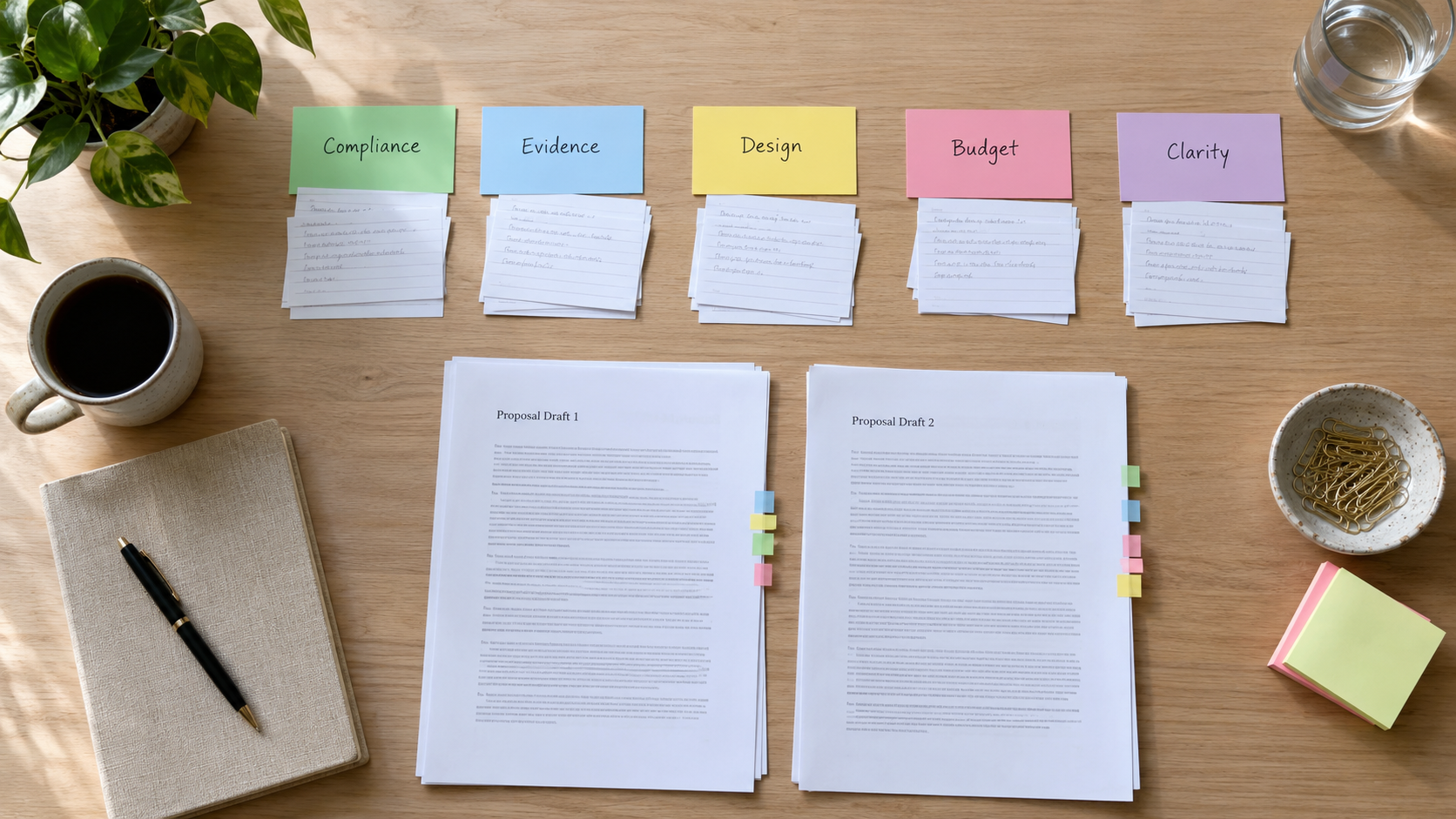
Classify every comment
Sort feedback into eligibility, compliance, responsiveness, need, design, evidence, outcomes, evaluation, capacity, partnerships, budget, sustainability, clarity, and presentation. Identify repeated concerns across reviewers.
For each comment, record the cited issue, supporting evidence, likely cause, proposed response, owner, and whether the change affects other sections. Avoid reacting to isolated wording before understanding the pattern.
Reconstruct the scoring logic
Map points earned and lost to the published criteria. Estimate which weaknesses materially affected the result. A one-point formatting issue should not consume the same effort as a poorly defined population in a heavily weighted section.
If comments appear inconsistent, ask what ambiguity in the proposal allowed different interpretations. The revision should make the intended logic unmistakable rather than argue with the reader.
Seek feedback appropriately
Follow the funder’s process and timing. Ask specific questions about fit, clarity, evidence, or competitiveness. Listen without debating. Confirm whether resubmission is allowed, whether priorities or forms will change, and whether the funder sees a viable path.
Not every funder can provide individualized feedback. Use the score, published criteria, award list, and independent review when more information is unavailable.
Repeat the go-or-no-go decision
Recheck eligibility, priorities, geography, award size, timing, match, partners, capacity, and opportunity cost. The project or funder may have changed. A resubmission should not proceed merely because substantial effort was already invested.
Choose among revising for the same opportunity, adapting for another funder, postponing until capacity improves, or stopping. Record the reason.
Identify the root cause
A reviewer comment is a symptom. “Insufficient detail” may result from unresolved design, poor structure, missing evidence, or a page limit spent on background. “Budget unclear” may reflect inconsistent activities rather than formatting.
Use a cause analysis for major issues. Ask why the concern occurred until the team reaches a decision, process, or evidence gap it can fix. Correcting the root cause improves several sections at once.
Revisit the need and population
Confirm that the need is specific, current, locally supported, and connected to the proposed response. Check geography, denominators, comparisons, trends, disparities, community input, existing services, and service gaps.
If reviewers could not tell who would benefit, define eligibility and recruitment. Remove broad context that does not advance the local argument.
Strengthen project logic
Trace the chain from need to objectives, activities, outputs, outcomes, measures, budget, and sustainability. Every activity should address a documented cause or gap. Every outcome should be plausible within the period.
Revise the logic model before revising prose. If the chain is weak, better wording will only describe the weakness more elegantly.
Test feasibility
Check staffing, recruitment, locations, technology, procurement, partner capacity, participant burden, schedule, and approvals. Compare targets with actual throughput and startup time.
Reduce scope when the project asks limited resources to serve too many people, sites, or outcomes. A focused project with credible delivery often scores better than an ambitious but unsupported model.
Improve evidence without overloading the narrative
Add evidence where it supports a decision: why the problem matters, why the approach should work, why targets are achievable, and why the organization can deliver. Use current and relevant sources.
Interpret evidence rather than listing citations. Remove statistics and studies that do not change the argument. Reviewers need a reasoned case, not a literature inventory.
Rebuild objectives and measures
Write objectives with a population, direction of change, measure, target, and timeframe. Distinguish outputs from outcomes. Confirm baseline, source, collection frequency, responsibility, and analysis.
Address attribution honestly. Select measures the project can influence and collect consistently. Explain how findings will guide decisions.
Reconcile the budget from the work plan
Recalculate staffing, units, rates, timing, procurement, partner costs, indirect costs, match, and other support. Connect each significant cost to an activity and explain assumptions.
Search for inconsistency across forms, narrative, partner letters, and budget. Remove costs for deleted activities and fund new requirements created by revision.
Upgrade partnership commitments
Replace generic support with defined roles, resources, authority, timelines, data, and accountability. Ask partners to review the revised scope and budget. Update letters and agreements rather than reusing documents tied to the earlier design.
If reviewers questioned duplication, explain how the partners and existing services fit together and where the project fills a remaining gap.
Make capacity evidence concrete
Use relevant outcomes, staff qualifications, community trust, systems, controls, facilities, and partnership history. Address identified limitations with named improvements.
Acknowledge new work honestly. Describe how technical assistance, hiring, phased startup, or governance will close the gap.
Build a response matrix
Create one row for every material reviewer concern. Include the original comment, interpretation, decision, change, affected sections, owner, evidence, and verification. Mark disagreements and explain the factual basis.
The matrix prevents a comment from being “addressed” in one section while contradictory text remains elsewhere. It also provides a record of how the proposal changed.
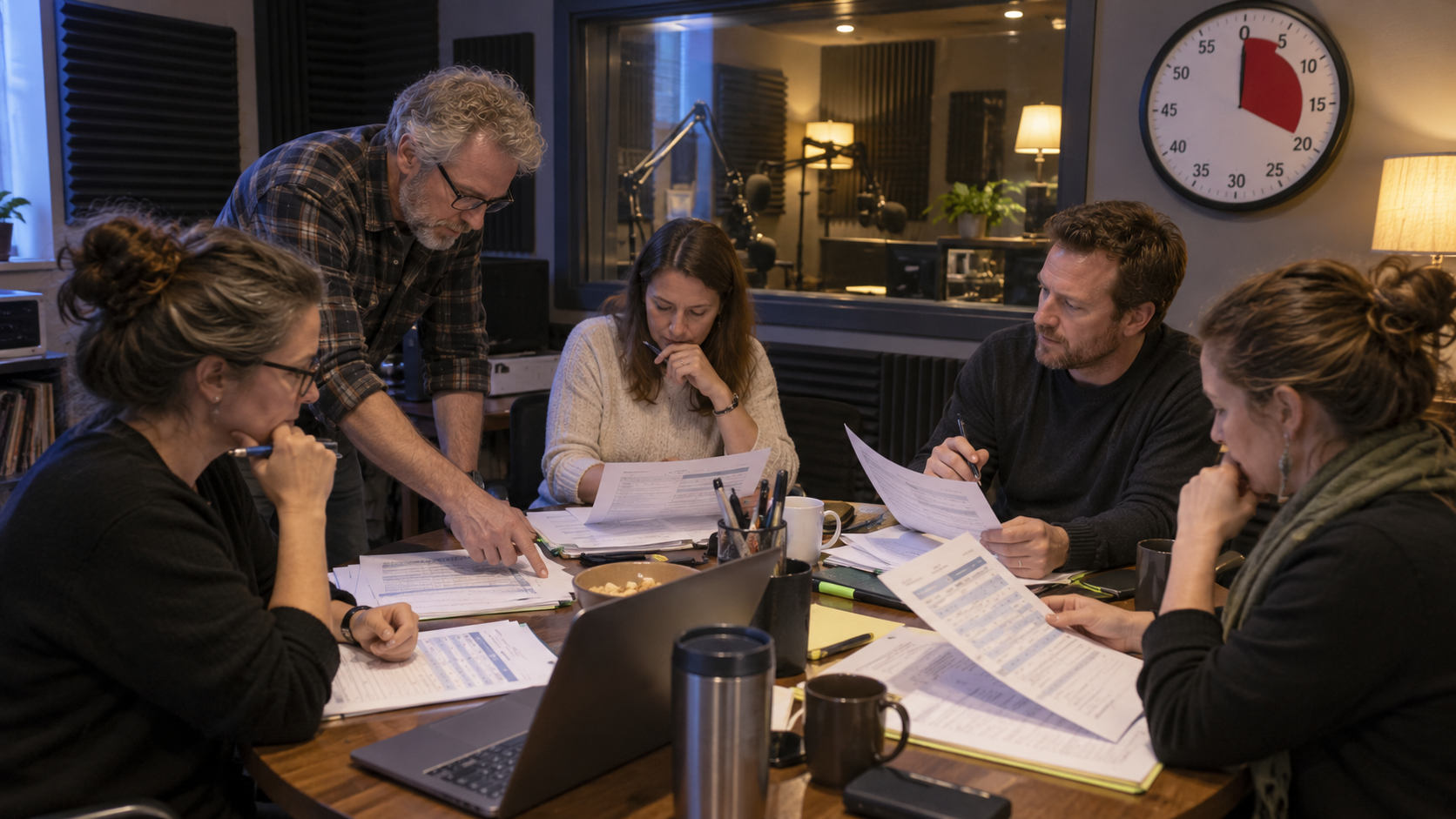
Use independent red-team review
Give reviewers the notice, scoring criteria, and near-final proposal without explaining what the writers intended. Ask them to score independently and identify the evidence behind each score.
Select reviewers who can challenge assumptions and have enough distance from the draft. Consolidate findings by risk and score impact. The proposal lead should decide changes rather than combining every preference.
Review compliance from zero
Requirements, forms, dates, page limits, file names, templates, and portal fields may have changed. Build a new compliance matrix. Do not rely on the prior submission checklist.
Validate the final package as the funder will receive it. Check conversions, attachments, signatures, links if allowed, character limits, and submission confirmation.
Keep the resubmission internally consistent
Search names, numbers, dates, populations, sites, staff effort, targets, and totals across the package. One revision can create several downstream inconsistencies.
Freeze key assumptions before final editing. Require controlled approval for late changes and repeat affected checks afterward.
Decide whether to acknowledge the prior proposal
Follow instructions. Some programs require a resubmission introduction or response to reviewers; others evaluate each application as new. When a response is allowed, be factual and concise.
State what changed and where. Do not spend limited space arguing that the earlier reviewers were wrong. Let the revised evidence and design demonstrate improvement.
Common resubmission mistakes
- Changing language while preserving weak design.
- Responding defensively to every comment.
- Treating all feedback as equally important.
- Resubmitting despite changed priorities or poor fit.
- Adding evidence without interpreting it.
- Expanding the project to answer every suggestion.
- Updating narrative but not budget or partner documents.
- Reusing an outdated compliance checklist.
- Skipping independent review because the proposal was reviewed before.
- Waiting until the deadline to confirm registrations and portal access.
Resubmission checklist
- The decision type and feedback are preserved accurately.
- A fresh go-or-no-go review confirms fit.
- Major comments are mapped to root causes and changes.
- The need, population, design, and outcomes form a clear chain.
- Scope and targets are feasible.
- The budget is rebuilt and reconciled.
- Partners approved current commitments.
- Capacity claims address prior concerns.
- An independent team scored the revision.
- Current instructions and final files passed compliance review.
Frequently asked questions
How much should change?
Change what the diagnosis requires. A competitive proposal limited by available funds may need modest updating. A low score tied to design or evidence requires substantial redevelopment.
Should every reviewer comment be accepted?
No. Interpret comments against criteria and evidence. Even when a recommendation is unsuitable, revise any ambiguity that caused the concern and document the decision.
Can the proposal go to another funder?
Yes, when genuine fit exists. Rebuild the request around the new funder’s priorities, award size, terms, and questions. Do not simply replace names.
How long should the team wait?
Use the next eligible cycle only if design, capacity, and required relationships can mature in time. Waiting can be strategic when rushed revision would repeat the weakness.
What if no feedback was provided?
Use scoring criteria, funded-project information, an independent review, funder patterns, and internal debrief. Ask whether the proposal made every scoreable claim easy to find and verify.
Should the same writer revise it?
The original writer may retain useful knowledge, but independent leadership and review are valuable. Assign ownership based on the root cause, not convenience.
Does resubmission improve the odds?
Only when the revision improves fit, evidence, design, capacity, or clarity. Prior submission by itself creates no advantage unless the program’s process says otherwise.
Turn feedback into a better decision
A successful revision is not measured only by a later award. The process should leave the organization with a clearer project, stronger evidence, more realistic budget, better partnerships, and sharper prospect judgment.
Resubmit when the revised proposal can answer the funder’s questions with credible facts and a coherent plan. That is a new application built from learning, not an old application sent again.
